Read the Question VERY Carefully
Poetry questions are precise. Check whether it asks for:
- theme
- message
- poetic device
- line explanation
- mood/tone
Answer only what is asked — extra explanation can cost time and marks.
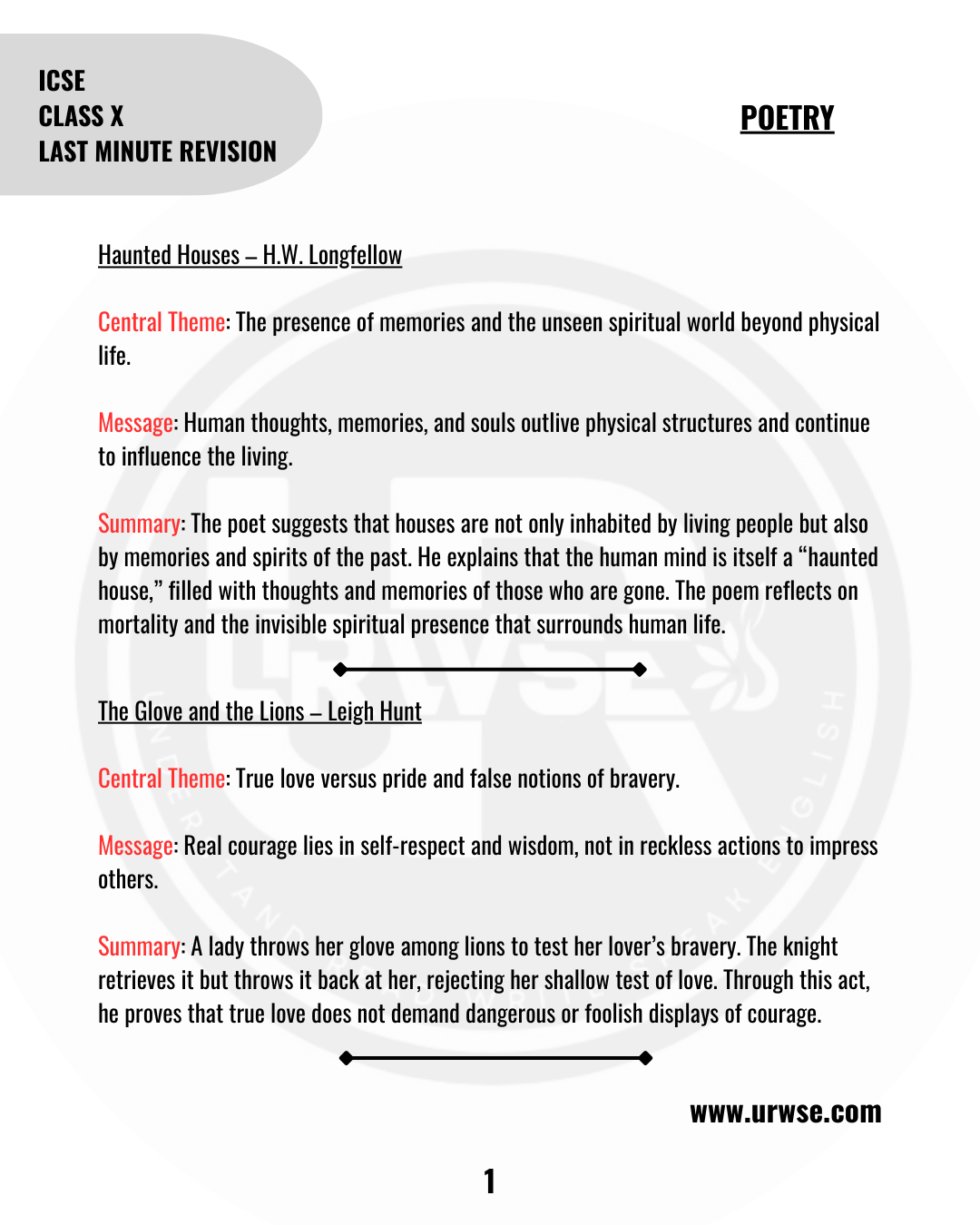
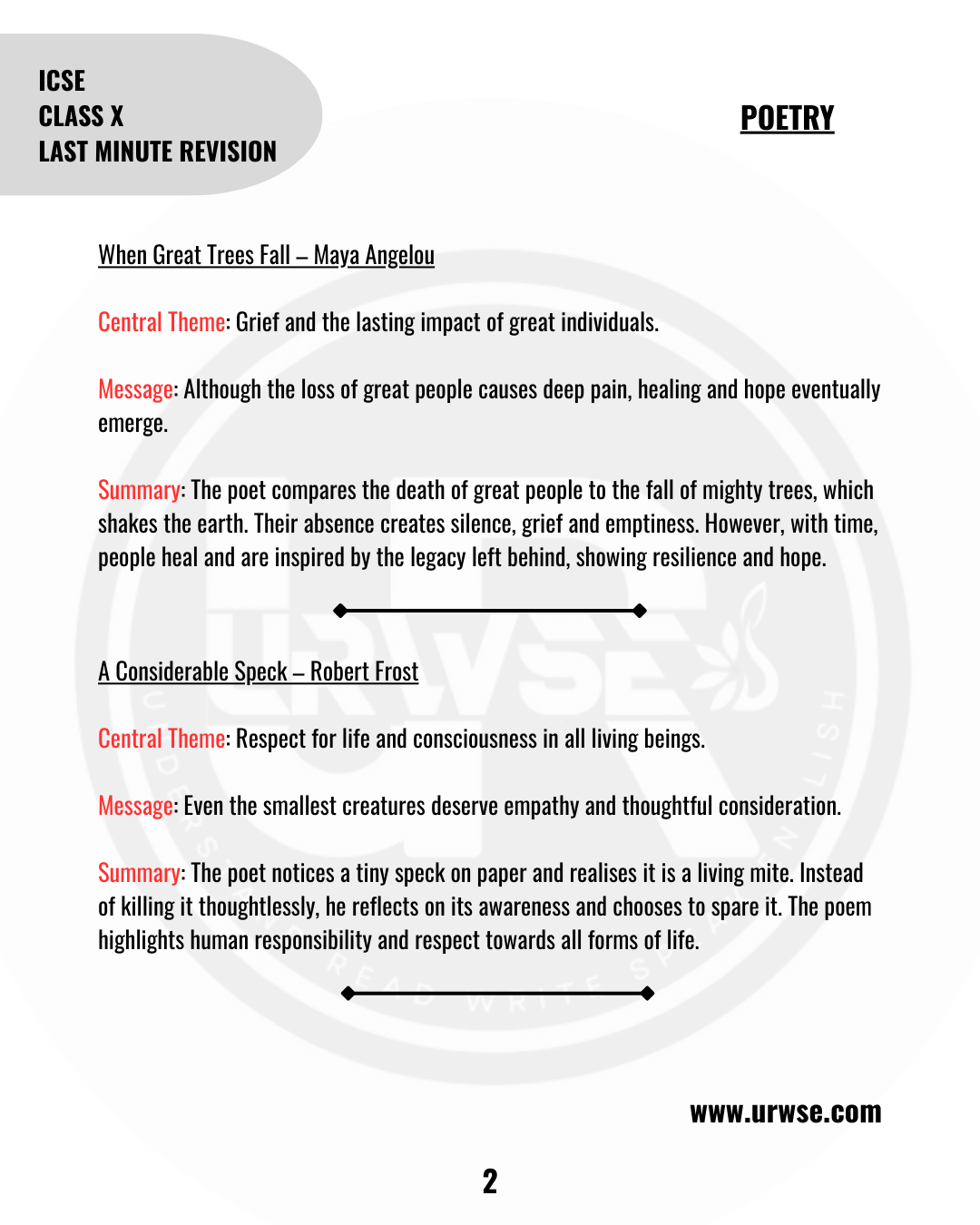
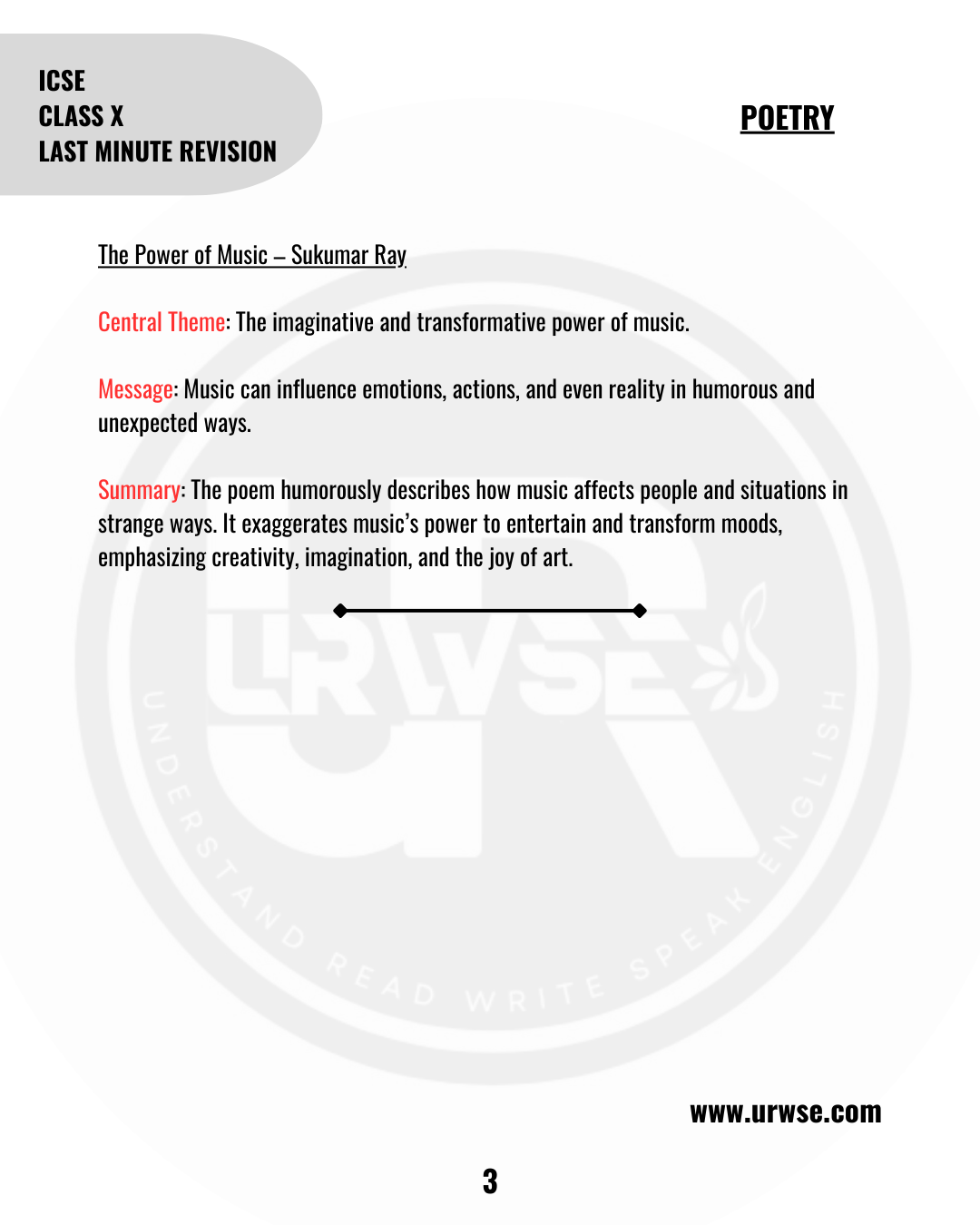
Always Use the Poem’s Central Idea
Even when explaining a line, briefly connect it to the central theme of the poem. This shows understanding, not memorisation.
Quote Short, Not Long
Use key words or phrases, not full lines.
✔️ Correct spelling
✔️ Correct punctuation
Example: instead of writing the whole line, quote just the phrase that matters.
Poetic Devices = Easy Marks
When asked about a device:
- Name it
- Quote the line/phrase
- Explain its effect
Common devices to revise:
- metaphor
- simile
- imagery
- personification
- repetition
- symbolism
Line / Stanza Explanation Formula
Use this structure:
- Literal meaning
- Deeper meaning
- Link to theme
This works for any poem, any question.
Tone & Mood Matter
Words like reflective, ironic, sorrowful, hopeful, humorous score well. Avoid vague words like nice or good.
Don’t Retell the Poem
Poetry answers are interpretation-based, not story-based. Explain ideas, not the entire poem.
Presentation Counts
- Neat handwriting
- Clear paragraphs
- Leave a line between answers
- Underline key terms once or twice only
Time Management Tip
Don’t spend too long on one poem. If stuck, answer the questions you know best first.
Night-Before Revision Hack
For each poem, remember:
- Central theme
- Message
- Poetic devices
- Overall tone
That’s enough to score well.
Final Thought
Poetry is not about memorising lines — it’s about understanding ideas.
REVISION NOTES: