Both English Language and English Literature adhere to the standard 80:20 assessment scheme.
Total Marks Distribution
| Particulars | English Language (Paper 1) | English Literature (Paper 2) |
| Total Marks | 100 Marks | 100 Marks |
| Theory Paper (External Exam) | 80 Marks | 80 Marks |
| Internal Assessment (Project Work/Listening & Speaking) | 20 Marks | 20 Marks |
| Duration of Theory Paper | 2 Hours | 2 Hours |
| Passing Criteria | Generally 33% to 35% in aggregate (school-specific). | Generally 33% to 35% in aggregate (school-specific). |
Theory Paper
Both papers are mandatory and require detailed, descriptive answers.
| Paper | Section/Question | Marks | Format & Focus | Preparation Strategy |
| Language | Question 1: Composition | 20 | An original essay (approx. 300-350 words) on a choice of topics (Narrative, Descriptive, Argumentative, Picture Composition). | Focus on structural clarity, vocabulary and grammar accuracy. |
| Language | Questions 2 & 3: Writing Skills | 20 | Letter Writing (Formal/Informal – 10 Marks); Notice and Email Writing (10 Marks). | Adhere strictly to the correct formats and word limits. |
| Language | Question 4: Comprehension | 20 | An unseen passage followed by questions requiring factual answers and inferential reasoning, plus a summary/meaning of vocabulary. | Practice identifying the central idea and using own words for answers. |
| Language | Question 5: Functional Grammar | 20 | Tenses, Prepositions, Synthesis/Transformation of Sentences, Active/Passive Voice, Direct/Indirect Speech, Phrases/Clauses. | Master fundamental grammar rules—this section is highly scoring if rules are known. |
| Literature | Questions based on Texts | 80 | Questions requiring detailed answers, textual references, character analysis, critical appreciation and themes from the prescribed texts (Prose, Poetry and Drama). | Read texts multiple times; memorize key quotes and context for descriptive answers. |
Syllabus
English Language Syllabus (Paper 1)
The focus is on developing advanced communication skills, both written and structural.
| Unit | Major Components | Key Focus Areas |
| Composition | Writing an original essay (300-350 words) on Narrative, Descriptive, Argumentative or Picture-based topics. | Develop clarity of thought, sequential presentation and rich vocabulary. |
| Letter Writing | Formal (e.g., to the Editor, Principal, Official) and Informal (e.g., to friends, relatives). | Strict adherence to the proper layout, addresses, salutations and tone. |
| Functional Writing | Notice Writing (brief and informative) and Email Writing (using proper email format and concise language). | Practice writing clear, concise content within the prescribed format. |
| Functional Grammar | Tenses (all forms), Prepositions, Synthesis (combining sentences using conjunctions, participles, etc.), Transformation (interchanging parts of speech, degrees of comparison). | Drill grammar exercises, focusing on rules of transformation and synthesis. |
| Comprehension | Reading and understanding an unseen passage, deriving inference and vocabulary testing. | Improve speed reading and ability to understand subtle meanings (inference). |
English Literature Syllabus (Paper 2)
| Unit | Major Components | Key Focus Areas |
| Prose/Short Stories | Stories selected from a prescribed collection (e.g., Treasure Trove collection or similar textbooks). | Character analysis, plot summary, themes and ethical/moral implications. |
| Poetry | Poems selected from a prescribed collection. | Poetic devices, rhyme scheme, critical appreciation, central idea and the poet’s tone/message. |
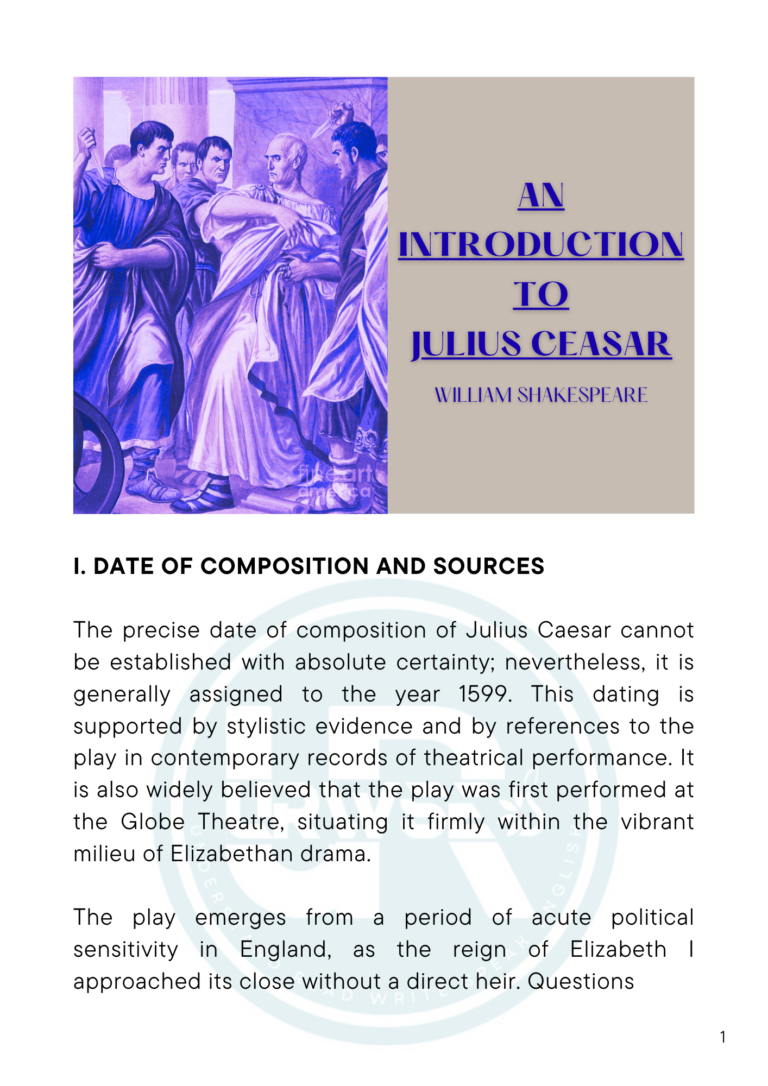
| Drama/Play | A full-length play or an excerpt from a major work (e.g., often an introduction to Shakespeare). | DRAMA: Julius Caesar – William Shakespeare (Acts I & II) TREASURE CHEST: A Collection of ICSE Short Stories & Poems (Evergreen Publications (India) Ltd. New Delhi) PROSE (Short Stories): Bonku Babu’s Friend – Satyajit Ray Oliver Asks for More – Charles Dickens The Model Millionaire – Oscar Wilde Home-coming – Rabindranath Tagore The Boy who Broke the Bank – Ruskin Bond POETRY: The Night Mail – W.H. Auden Skimbleshanks: The Railway Cat – T.S. Eliot I Remember, I Remember – Thomas Hood A Doctor’s Journal Entry for August 6, 1945 – Vikram Seth A Work of Artifice – Marge Piercy Study of dramatic structure, character development, dialogues and historical context. |
Internal Assessment (20 Marks per Paper)
The 20 marks for Internal Assessment (IA) for each paper are evaluated at the school level and focus on practical communication skills.
| Subject | Assessment Modality (Examples) | Assessment Focus |
| English Language | Listening and Speaking Skills (ASL – Assessment of Speaking and Listening). Includes individual talks, group discussions, debates and listening comprehension tests. | Fluency, clarity of articulation, pronunciation, and ability to comprehend spoken English. |
| English Literature | Project Work/Assignments. Research projects on authors, literary devices, character studies, book reviews or comparative analysis of themes. | Depth of research, analytical ability, use of proper literary terms and presentation skills. |