




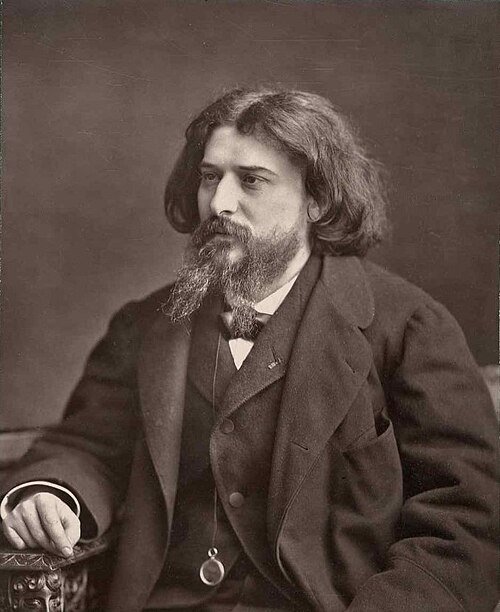
Alphonse Daudet (1840–1897) was a prominent 19th-century French novelist and short-story writer known for his poetic approach to realism and empathetic portrayals of human life. Born in Nîmes, France, his southern roots inspired some of his most cherished works, including Letters from My Windmill (Lettres de mon moulin) and the Tartarin of Tarascon trilogy. His firsthand experience enlisting in the French army during the Franco-Prussian War deeply influenced his writing, inspiring patriotic and poignant stories like “The Last Lesson”, which explores cultural identity and the defense of one’s mother tongue under foreign occupation.
Summary and Passage Explanation:
- Franz’s Late Start, Fears, and Temptations: On a warm and bright morning, young Franz starts for school very late and is in deep dread of receiving a scolding from M. Hamel. The schoolmaster had announced that he would question the class on the rules of participles, a topic about which Franz does not know a single word. For a moment, Franz is intensely tempted to skip school and spend the day outdoors listening to the birds chirping at the edge of the woods and watching the Prussian soldiers drilling in the open field behind the sawmill. Despite these strong temptations, Franz finds the inner strength to resist and hurries off toward school.
- Passing the Bulletin Board at the Town Hall: As Franz passes the town hall, he notices a crowd gathered in front of the public bulletin board. Over the last two years, this board had been the source of all the town’s bad news, including lost battles, military drafts, and commands from the occupying officers. Without stopping, Franz wonders what could be wrong now. As he hurries past, the blacksmith Wachter, who is reading the bulletin with his apprentice, calls out to Franz, telling him not to run so fast because he will get to school in plenty of time. Franz, assuming the blacksmith is mocking him, continues running and arrives at M. Hamel’s little garden completely out of breath.
- The Unfamiliar, Solemn Silence at School: Usually, the beginning of a school day is marked by a massive, chaotic bustle that can be heard all the way out in the street. This includes the loud opening and closing of desks, lessons repeated in loud unison with students covering their ears to understand better, and the schoolmaster’s heavy iron ruler rapping continuously on the table. Franz had fully planned to use this noisy commotion to slip into his seat unnoticed. However, on this particular day, everything is entirely still and quiet, resembling a peaceful Sunday morning.
- Franz’s Embarrassed Entry and M. Hamel’s Kindness: Peering through the window, Franz sees that his classmates are already seated in their places and that M. Hamel is walking up and down the room with his terrible iron ruler tucked under his arm. Franz is forced to open the classroom door and walk in before everyone, blushing deeply and feeling absolutely terrified of the consequences. To his astonishment, nothing bad happens; M. Hamel looks at him and speaks very kindly, instructing him to go to his place quickly because they were about to begin the lesson without him.
- Noticing the Teacher’s Fine Attire and the Village Elders: After jumping over his bench and settling at his desk, Franz recovers from his fright and notices that M. Hamel is dressed in his finest clothes. The teacher is wearing his beautiful green coat, a frilled shirt, and an embroidered black silk cap—special garments he never wears except on inspection and prize-distribution days. Franz is further mystified by the overall solemnity of the room and the presence of the village elders quietly sitting on the back benches, which are normally empty. Among them are old Hauser with his three-cornered hat, the former mayor, the former postmaster, and several others. Everyone looks sad, and old Hauser has even brought an old primer thumbed at the edges, holding it open on his knees with his spectacles resting across the pages.
- The Shocking Announcement from Berlin: While Franz is trying to make sense of these strange occurrences, M. Hamel mounts his chair. In the same grave and gentle voice he used to address Franz, he announces to the children that this will be the last lesson he will ever give them. He explains that an order has come from Berlin to teach only German in the schools of Alsace and Lorraine, that the new master is arriving the next day, and that this is their last French lesson. He implores the class to be very attentive. This news strikes Franz like a sudden, devastating thunderclap.
- Franz’s Immediate Guilt and Change of Heart: Franz realizes with horror that this terrible order was what the townspeople had been reading on the bulletin board at the town hall. He is instantly filled with deep regret for neglecting his studies, wasting time seeking birds’ eggs, and sliding on the Saar River. His schoolbooks—including his grammar and his history of the saints—which had seemed like such a heavy, annoying nuisance just a short while ago, suddenly feel like old friends that he cannot bear to give up. Furthermore, the realization that M. Hamel is leaving forever makes Franz completely forget about the teacher’s strictness, his iron ruler, and how cranky he used to be.
- Understanding the Elders’ Presence and Collective Respect: Franz now understands that M. Hamel has put on his fine Sunday clothes in honor of this final lesson. He also realizes that the village elders are sitting at the back of the room because they are deeply sorry for not attending school more during their own youth. Their presence is a collective gesture of gratitude to M. Hamel for his forty years of faithful service, and a silent, poignant way of showing respect for their homeland that is no longer theirs.
- A Failed Recitation and M. Hamel’s Refusal to Scold: While lost in these thoughts, Franz hears his name called to recite the rule of the participle. He desperately wishes he could recite the dreadful rule loud, clear, and without a single mistake, but he gets mixed up on the very first words. He stands silently at his desk, holding onto it with a pounding heart, not daring to look up at his teacher. Instead of scolding him, M. Hamel tells Franz that he will not punish him because the boy must already feel bad enough.
- The Procrastination of Alsace and the Loss of Identity: M. Hamel explains that Franz’s situation is a symptom of a larger, collective flaw in Alsace: the habit of putting off learning until “tomorrow”. He points out that the German occupiers will now have every right to mock them, pointing out that they claim to be Frenchmen yet can neither speak nor write their own native language. However, M. Hamel reassures Franz that he is not the only one to blame, as everyone in the community has a great deal to reproach themselves with.
- Sharing the Blame and the Value of Mother Tongue: M. Hamel spreads the blame to the parents, noting that they were not anxious enough to have their children learn, preferring to put them to work on farms or in the mills to earn a little more money. He also blames himself, confessing that he frequently sent his students to water his flowers instead of studying, and gave them holidays whenever he wanted to go fishing. M. Hamel then speaks passionately about the French language, declaring it the most beautiful, clearest, and most logical language in the world. He stresses that they must guard it and never forget it, because when a population is enslaved, holding fast to their language is as if they possess the key to their prison.
- A Miraculous Lesson in Grammar: M. Hamel opens a grammar book and reads the day’s lesson to the class. To his own amazement, Franz finds that he understands everything perfectly, and the concepts seem incredibly easy. He reflects that he had never listened so carefully before, and that M. Hamel had never explained the concepts with such immense patience. It feels as if the teacher is trying to give them every bit of his knowledge and pack it into their heads at one single stroke before his forced departure.
- The Silent Writing Lesson and the Cooing Pigeons: Following grammar, the class transitions to a writing lesson. M. Hamel has prepared brand new copies for them, written in a beautiful round hand: “France, Alsace, France, Alsace”. Hung from the rods at the top of their desks, these papers look like small flags floating throughout the schoolroom. The entire classroom falls into a profound, intense silence, with the only audible sound being the scratching of pens across paper. Even when beetles fly into the room, nobody pays attention, not even the youngest children who continue working. Hearing the pigeons cooing softly on the roof, Franz thinks to himself with bitter irony, wondering if the occupiers will force even the pigeons to sing in German.
- M. Hamel’s Silent Farewell to His Schoolroom: Whenever Franz pauses to look up from his writing, he sees M. Hamel sitting completely motionless in his chair, staring intently at one object after another. It is as if the schoolmaster is trying to permanently imprint the exact appearance of the classroom in his mind. M. Hamel has lived and worked in this exact spot for forty years, with his garden outside the window and his class right in front of him. The only physical changes over those four decades are the desks and benches worn smooth by use, the walnut trees in the garden growing taller, and a hopvine he planted himself now twining up around the windows to the roof. Franz realizes how heartbreaking it must be for the poor man to leave it all behind, especially as he can hear his sister packing trunks in the room directly above to prepare for their departure the next day.
- The Emotional Alphabet Chanting: Despite his deep grief, M. Hamel maintains the immense courage to conduct every single lesson to the very end. After writing, they complete a history lesson, and then the youngest children chant their alphabet sounds (“ba, be, bi, bo, bu”) in unison. At the back of the room, old Hauser puts on his spectacles and, holding his primer in both hands, spells out the letters along with the children. Hauser is visibly crying, and his voice trembles so heavily with raw emotion that it sounds funny to the children, making them want to both laugh and cry at the same time.
- The Striking of Twelve and the Prussian Trumpets: Suddenly, the church clock strikes twelve, followed immediately by the sounding of the Angelus prayer. At that exact moment, the trumpets of the Prussian soldiers returning to the barracks from their morning drill blast loudly under the classroom windows. M. Hamel stands up from his chair, looking extremely pale and incredibly tall. He begins to speak, saying, “My friends… I—I—” but he is suddenly choked with overwhelming emotion and cannot finish his sentence.
- A Final Chalk Message and Silent Dismissal: Unable to speak, M. Hamel turns to the blackboard and takes a piece of chalk. Bearing down with all of his physical might, he writes in letters as large as he possibly can: “Vive La France!” (Long Live France!). He then stops, leans his head heavily against the classroom wall, and without uttering another word, makes a silent gesture to the class with his hand to indicate: “School is dismissed — you may go.”.
Important Word Meanings:
- Dread: Great fear or apprehension regarding an impending event.
- Scolding: An angry rebuke or reprimand for a mistake or bad behavior.
- Resist: To withstand or fight off a temptation or force.
- Bustle: A state of noisy, busy, and hyperactive movement.
- Unison: Simultaneous performance of action or speech, such as students repeating a lesson together.
- Commotion: A state of confused, noisy, and chaotic disturbance.
- Solemn: Deeply serious, formal, dignified, and sincere.
- Primer: A basic introductory textbook used for teaching children how to read.
- Thunderclap: A sudden, shocking, and overwhelmingly dramatic announcement.
- Nuisance: An annoying or troublesome thing, person, or practice.
- Reproach: To express criticism, blame, or disappointment in oneself or others.
- Angelus: A traditional Catholic devotion and prayer recited at noon, signaled by the ringing of a church bell.
Thematic Explanations:
1. Linguistic Identity and Resistance to Cultural Subjugation
- Language as a Symbol of Identity: The story highlights how a mother tongue is intrinsically linked to cultural heritage, national identity, and personal self-worth. When Berlin issues the decree to ban French in Alsace and Lorraine, it represents an attempt at political and cultural erasure.
- The “Key to the Prison” Metaphor: M. Hamel emphasizes that when a population is enslaved or occupied, holding fast to their native language serves as their ultimate weapon of psychological freedom—“as if they had the key to their prison”.
- Limits of Imperial Power: Franz’s reflection while hearing the pigeons coo on the roof—“Will they make them sing in German, even the pigeons?”—satirizes linguistic chauvinism, emphasizing that while occupiers can enforce laws on humans, they cannot conquer the natural world or the inherent human spirit.
2. Procrastination and the Pain of Lost Opportunities
- The Illusion of “Plenty of Time”: A central theme is the human habit of postponing learning and duty under the assumption that there will always be a tomorrow. M. Hamel calls this the “great trouble with Alsace”.
- Sudden Realization and Regret: Both Franz and the village elders experience immediate remorse when they realize their opportunity to learn French has been revoked. Franz regrets wasting time hunting for birds’ eggs or sliding on the Saar, while the elders sit in the back benches regretting that they did not attend school more in their youth.
- Shared Responsibility: M. Hamel points out that blame is shared across the entire community: parents prioritized placing children in mills or farms for extra money, and M. Hamel himself occasionally gave students holidays to water his garden or go fishing.
3. Patriotism and Silent Defiance
- Awakening of National Pride: The threat of foreign occupation transforms passive citizens into conscious patriots. Books that previously felt like a heavy “nuisance” suddenly become “old friends” to Franz.
- Honoring Cultural Heritage: M. Hamel wears his fine Sunday attire—his green coat, frilled shirt, and embroidered silk cap—to honor the last French lesson, while the village elders assemble to pay tribute to his forty years of service and show respect for their losing homeland.
- The Final Act of Defiance: Unable to speak as the church clock strikes twelve and Prussian trumpets sound outside, M. Hamel writes “Vive La France!” (Long Live France!) on the blackboard using all his physical strength, turning a quiet moment into a bold statement of resistance.
4. The Dignity of Education and Unsung Educators
- Forty Years of Dedicated Service: M. Hamel symbolizes the quiet, foundational dedication of educators who shape a community’s identity.
- Devotion to Duty Until the End: Despite the heartbreaking knowledge that his sister is upstairs packing trunks for their forced departure the next day, M. Hamel maintains the courage to teach every lesson—grammar, writing, history, and the alphabet—to the absolute end.
Character analysis:
Franz
- The Carefree, Distracted Student: Franz is introduced as a typical young boy who struggles with the discipline of school. He is easily tempted by the sensory beauty of the outdoors—the warm sunshine, chirping birds, and Prussian soldiers drilling—which feel far more alluring than the abstract rules of participles. He views his schoolbooks as a heavy, annoying “nuisance” and fears the strictness of his teacher, M. Hamel, particularly his “terrible iron ruler” and “cranky” disposition.
- The Catalyst of Sudden Regret: The announcement that Berlin has banned the French language in his school acts as a sudden “thunderclap” that shatters Franz’s carefree worldview. He is instantly seized by immense guilt for wasting his time seeking birds’ eggs and sliding on the Saar River instead of learning.
- Awakening of National Identity: Franz’s transformation is rapid and emotional. His books are suddenly transformed into “old friends now that I couldn’t give up,” and his fear of M. Hamel is replaced by profound empathy and respect. During the final grammar lesson, his cognitive barrier dissolves; because he listens with newfound, intense focus, he is amazed at how easily he understands the lesson, symbolizing his sudden, deep connection to his mother tongue.
M. Hamel
- The Stern but Dedicated Educator: For forty years, M. Hamel has lived and worked in the exact same schoolroom, quietly anchoring the community’s educational life. To his students, he was long defined by his strictness and the heavy rapping of his iron ruler.
- A Symbol of Collective Dignity and Grace: On his final day, M. Hamel wears his finest Sunday clothes to honor the last French lesson. When Franz fails his recitation, M. Hamel does not scold him; instead, he uses the moment to reflect on the collective procrastination of Alsace, which habitually puts off learning for “tomorrow”. He shows humility by sharing the blame, admitting that he often prioritized watering his flowers or going fishing over teaching.
- The Guardian of Cultural Legacy: M. Hamel delivers a passionate defense of the French language, calling it the most beautiful, clearest, and most logical in the world. He famously declares that a captured people’s language is the “key to their prison”. Despite the heart-wrenching pain of hearing his sister pack trunks upstairs, M. Hamel conducts every lesson to the very end. Choked with emotion as the clock strikes twelve, he writes “Vive La France!” on the blackboard in a powerful, silent act of absolute defiance.
The Village People (Old Hauser, Former Mayor, Former Postmaster)
- A Chorus of Collective Remorse: Sitting on the normally empty back benches, the village elders represent the older generation of Alsatians who failed to prioritize education in their youth. Their presence is a physical manifestation of regret for lost opportunities.
- Guardians of a Fading Heritage: The elders attend the final class to show their respect for M. Hamel’s forty years of faithful service and to honor a homeland that is no longer theirs.
- The Tragedy of Dispossession: This is epitomized by old Hauser, who brings an old, edge-worn primer and puts on his spectacles to spell out basic alphabet letters alongside the youngest children. His crying and trembling voice represent the profound, visceral grief of an entire community realizing they are being stripped of their linguistic identity.
QnA based on Important Extracts:
Extract 1: The Allure of Nature vs. Academic Duty
“I started for school very late that morning and was in great dread of a scolding, especially because M. Hamel had said that he would question us on participles, and I did not know the first word about them. For a moment I thought of running away and spending the day out of doors. It was so warm, so bright! The birds were chirping at the edge of the woods; and in the open field back of the sawmill the Prussian soldiers were drilling. It was all much more tempting than the rule for participles, but I had the strength to resist, and hurried off to school.”
Major Takeaways:
- Internal Conflict: Highlights the contrast between a child’s natural desire for freedom outdoors and the rigid discipline of the schoolroom.
- Historical Context: The subtle mention of Prussian soldiers drilling establishes the political backdrop of the Franco-Prussian War and foreign occupation.
- Moral Willpower: Shows that despite his fear of punishment, Franz possesses the integrity to overcome temptation and choose duty.
Questions & Solutions:
Q1. Why was Franz in “great dread of a scolding” that morning?
- Solution: Franz was running very late for school and was terrified of being reprimanded by his master, M. Hamel. M. Hamel had announced that he would test the class on the rules of participles, a topic Franz knew absolutely nothing about.
Q2. What specific outdoor distractions tempted Franz to play hooky?
- Solution: The morning was warm and bright, with birds chirping invitingly at the edge of the woods. In addition, the Prussian soldiers were drilling in the open field behind the sawmill, providing an exciting spectacle that was far more tempting than grammar rules.
Q3. What does Franz’s decision to “resist” reveal about his character at the start of the story?
- Solution: It reveals that although Franz is a carefree boy who prefers nature over studies, he still possesses a basic sense of discipline and responsibility. He has the self-control to suppress his childish urges and face his obligations.
Extract 2: The Eerie Silence of the Schoolroom
“Usually, when school began, there was a great bustle, which could be heard out in the street, the opening and closing of desks, lessons repeated in unison, very loud, with our hands over our ears to understand better, and the teacher’s great ruler rapping on the table. But now it was all so still! I had counted on the commotion to get to my desk without being seen; but, of course, that day everything had to be as quiet as Sunday morning.”
Major Takeaways:
- Atmospheric Contrast: The lively, chaotic noise of an ordinary school morning is sharply set against an uncanny, solemn stillness.
- Foreshadowing: The phrase “as quiet as Sunday morning” serves as a literary device to signal that something grave and life-altering has occurred.
- Broken Expectations: Franz’s plan to rely on routine commotion fails, forcing him to confront the strange atmosphere directly.
Questions & Solutions:
Q1. How did Franz usually expect the school environment to be when classes began?
- Solution: Franz expected a scene of noisy commotion—desks slamming open and shut, students shouting their lessons in loud unison while holding their hands over their ears, and M. Hamel’s iron ruler rapping forcefully on the table.
Q2. Why had Franz “counted on the commotion”, and why was he disappointed?
- Solution: Franz had hoped to use the chaotic noise as cover to slip into his seat unnoticed without revealing that he was late. He was disappointed because the room was completely silent, leaving him exposed and forced to enter in front of everyone.
Q3. Identify the figure of speech in “as quiet as Sunday morning” and explain its significance.
- Solution: The figure of speech is a simile. It compares the silence of the school day to the solemn quiet of a holy Sunday morning, setting a reverent, tragic tone for the life-changing news M. Hamel is about to deliver.
Extract 3: The Thunderclap Announcement
“M. Hamel mounted his chair, and, in the same grave and gentle tone which he had used to me, said, ‘My children, this is the last lesson I shall give you. The order has come from Berlin to teach only German in the schools of Alsace and Lorraine. The new master comes tomorrow. This is your last French lesson. I want you to be very attentive.’ What a thunderclap these words were to me!”
Major Takeaways:
- Cultural Subjugation: Imperial conquerors use educational decree to erase the mother tongue and enforce political dominance.
- Immediate Trauma: The decree strips away linguistic rights overnight without warning.
- The “Thunderclap” Moment: Serves as the turning point of the story, instantly transforming Franz’s apathy into deep sorrow and patriotism.
Questions & Solutions:
Q1. What order had been issued from Berlin, and what territories were directly affected by it?
- Solution: The order from Berlin mandated that only German was to be taught in all public schools. The French border territories of Alsace and Lorraine were directly affected by this policy.
Q2. Why does Franz compare M. Hamel’s announcement to a “thunderclap”?
- Solution: Franz uses the metaphor “thunderclap” because the announcement was sudden, shocking, and emotionally devastating. It unexpectedly shattered his peaceful world and made him realize that his right to learn his native language was gone forever.
Q3. How did Franz’s feelings toward his books and teacher instantly change following this announcement?
- Solution: Franz felt immediate guilt for wasting his time seeking birds’ eggs or sliding on the Saar River. His grammar and history books, which had felt like a heavy nuisance a moment ago, suddenly became “old friends” he couldn’t bear to abandon. He also completely forgot M. Hamel’s strict ruler and cranky nature.
Extract 4: Procrastination and Language as Freedom
“See how it is! Every day we have said to ourselves, ‘Bah! I’ve plenty of time. I’ll learn it tomorrow.’ And now you see where we’ve come out. Ah, that’s the great trouble with Alsace; she puts off learning till tomorrow… when a people are enslaved, as long as they hold fast to their language it is as if they had the key to their prison.”
Major Takeaways:
- The Illusion of Time: Procrastination blinds people to the value of education until an unforeseen crisis revokes the opportunity.
- Collective Failure: Educational neglect is shared by students, working-class parents, and teachers alike.
- Language as Resistance: Preserving one’s mother tongue serves as a psychological fortress against mental enslavement under foreign occupation.
Questions & Solutions:
Q1. What did M. Hamel identify as the “great trouble with Alsace”?
- Solution: M. Hamel identified the chronic habit of putting off learning until “tomorrow” as the great trouble with Alsace. The citizens continuously deferred education, leaving them unable to properly speak or write their own language when foreign oppressors took control.
Q2. How does M. Hamel distribute the blame for the children’s poor education?
- Solution: M. Hamel spreads the blame across three groups:
- The Children: For continuously postponing their studies.
- The Parents: For prioritizing sending their children to work on farms or in mills for extra money over schooling.
- Himself: For giving pupils holidays when he wished to go fishing or sending them to water his garden during class hours.
Q3. Deconstruct M. Hamel’s metaphor: “it is as if they had the key to their prison.”
- Solution: M. Hamel compares a native language to a key that unlocks a cell. When a nation is politically conquered, maintaining its native language preserves its cultural heritage, unity, and self-respect. As long as a people hold fast to their language, their minds remain unvanquished, giving them the means to maintain psychological freedom.
Extract 5: The Climax and “Vive La France!”
“All at once the church-clock struck twelve. Then the Angelus. At the same moment the trumpets of the Prussians, returning from drill, sounded under our windows. M. Hamel stood up, very pale, in his chair. I never saw him look so tall. ‘My friends,’ said he, ‘I—I—’ But something choked him. He could not go on. Then he turned to the blackboard, took a piece of chalk, and, bearing on with all his might, he wrote as large as he could — ‘Vive La France!’”
Major Takeaways:
- Auditory Symbols: The striking clock, the religious Angelus, and the invading Prussian trumpets sound together, signaling the formal end of an era.
- Overwhelming Emotion: M. Hamel’s physical inability to finish his sentence demonstrates the sheer depth of his heartbreak.
- Silent Patriotism: His final act of writing on the board transforms a moment of defeat into a lasting symbol of defiance.
Questions & Solutions:
Q1. What simultaneous sounds coincided with the end of M. Hamel’s last lesson?
- Solution: The end of the lesson was marked by the church clock striking twelve, the ringing of the Angelus prayer, and the blast of Prussian trumpets outside as soldiers returned from drill.
Q2. Why did M. Hamel appear “very pale” and “so tall” to Franz?
- Solution: M. Hamel appeared “very pale” due to the emotional distress of leaving his classroom after forty years. He looked “so tall” because his dignified composure, patriotism, and courage in that final moment elevated him to a stature of immense moral authority in Franz’s eyes.
Q3. Describe M. Hamel’s final action at the blackboard and explain its emotional and political significance.
- Solution: Choked by emotion and unable to speak, M. Hamel turned to the blackboard, took a piece of chalk, and using all his physical strength wrote in giant letters: “Vive La France!” (Long Live France!). Politically, it was a silent act of defiant resistance against Prussian occupation; emotionally, it was a passionate declaration of love for his homeland.
Textual Exercise Solutions:
COMING SOON
Video Explanation:



Leave a Reply